
How to Pair an Observation Deck With Street-Level NYC Moments
A skyline-focused day in New York, New York can feel surprisingly calm when it is planned around one memorable view instead of a long list of attractions. Midtown is an especially practical starting point because it puts visitors near major transit, classic architecture, Bryant Park, Herald Square, and several walkable routes. Before choosing a time slot, review ESB Events to see whether a special occasion, seasonal program, or building-lighting schedule could shape the timing of your visit.
The goal is not to see every tower, bridge, and waterfront in one day. It is to create a route that gives the New York City skyline room to register. A high viewpoint can provide the big-picture moment, while a slower walk at street level reveals the details: Art Deco facades, busy corners, pocket parks, food carts, brownstones, river breezes, and the changing light between buildings.
Why a Skyline-Focused Day Works
New York rewards focused planning. Rather than moving from one distant landmark to another, choose a theme and let geography guide the schedule. Skyline views are flexible enough to include an observation deck, a bridge approach, a park bench, a rooftop meal, or a waterfront promenade. That variety makes it easier to match the day to your budget, mobility needs, interests, and energy level.
It also makes room for experiences that are easy to overlook on a packed itinerary. You might pause over the stone lions at the New York Public Library, browse a shop in Koreatown, or sit in a shaded plaza with a coffee. These breaks are not wasted time. They give the day a natural rhythm and make the skyline stop feel like the centerpiece rather than another item to check off.
How to Choose the Right View
Height is only one part of a good skyline experience. Think about what you want to see and how you want to spend the hours around it.
Choose by the kind of scene you want
- Classic Midtown panorama: A strong choice for first-time visitors who want to see the city’s density, landmarks, and long avenues from above.
- Open-air perspective: Best for travelers who value fresh air, changing weather, and unobstructed photo angles.
- Downtown and harbor scenery: Suits visitors who want bridges, water, Lower Manhattan, and views toward the Statue of Liberty.
- West-side river view: Pairs naturally with Chelsea, the Meatpacking District, galleries, and sunset walks near the Hudson River.
- Street-level view: Ideal for travelers who prefer free public spaces and want the skyline framed by parks, piers, or avenues.
Build the Route Around One Main Stop
Once you select the primary view, keep the surrounding stops in the same part of Manhattan. A Midtown plan might combine an observation experience with Bryant Park, the library exterior, Koreatown, and a meal near Herald Square. A west-side plan could start with an elevated walk, continue through Chelsea, and end by the river.
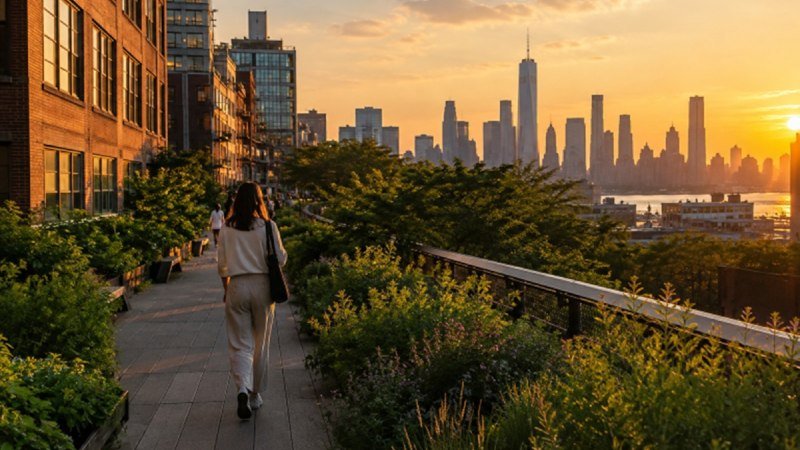
For a route that changes the city’s perspective without demanding another ticketed attraction, follow the elevated path through Chelsea and then continue toward the waterfront. It is a useful contrast to a high observation deck because the city appears at eye level, with trains, streets, buildings, gardens, and pedestrians all sharing the frame.
Limit yourself to two or three nearby additions. Plan lunch or an indoor break near the middle of the day, then keep the evening open. If your preferred view is affected by clouds or you simply want more time in a neighborhood, flexibility will be more valuable than an overly precise schedule.
Pick the Best Time of Day
Every viewing window has a different character. Morning may bring cooler conditions and a quieter feeling. Late afternoon offers warmer light and gives you time to transition into dinner. Sunset can be dramatic, but it is often the most popular period, so build in time for entry procedures and elevator waits. After dark, windows, bridges, and traffic create a completely different visual texture.
Check the local sunset time on the day of your visit, not weeks in advance. Arrive early enough to settle in before the light changes, and remember that cloudy conditions can make a planned sunset view less distinct. If photography matters, bring a charged phone, clear storage space, and a secure strap or pocket for your device.
Pair Big Views With Street-Level Sights
A high viewpoint shows how the city fits together. Walking afterward shows how it feels. Choose one slower activity that fits your area: visit a museum during hot or rainy hours, browse a market, sit in a park, or take a short architectural detour. In Midtown, even a few blocks can shift the mood from office towers to theaters, bookstores, restaurants, or residential streets.
Waterfront paths are especially effective after a dense day in central Manhattan. The open horizon gives your eyes a rest, and the skyline becomes a distant composition rather than a wall of buildings. Choose a café or casual restaurant close to your next stop so that a meal does not require a long cross-town trip.
Plan for Weather, Visibility, and Seasonal Moments
Clear visibility can matter more than the exact time of your reservation. Check cloud cover, rain, wind, temperature, and air-quality conditions before committing to a lengthy outdoor route. Wear shoes suitable for several miles of pavement, carry water in warm weather, and bring a light layer because exposed decks and waterfronts can feel cooler than the streets below.
Keep an indoor backup ready, such as a museum, gallery, or long lunch. Seasonal events can also add purpose to a skyline day. The setting sun’s alignment with Manhattan’s street grid draws photographers to east-west streets around late May and mid-July, though exact dates and viewing conditions vary each year. Treat it as a bonus, not a reason to overpack the day.
A Simple One-Day Skyline Itinerary
- Morning: Begin with coffee and a neighborhood walk near your main skyline stop.
- Late morning: Visit the primary observation point or viewpoint while you still have energy.
- Lunch: Eat within walking distance rather than traveling across Manhattan.
- Afternoon: Add a museum, park, gallery, or relaxed café break.
- Late afternoon: Walk toward a bridge, waterfront, or public green space for a second angle.
- Evening: Have dinner nearby and decide whether city lights are worth one final stroll.
Common Planning Mistakes to Avoid
- Booking multiple observation decks in a single day.
- Crossing Manhattan repeatedly for stops that are only a few minutes apart on paper.
- Ignoring rain, wind, heat, or poor visibility.
- Leaving no time for meals, restrooms, transit delays, or spontaneous discoveries.
- Assuming sunset is always the best option for every traveler.
- Using outdated hours, ticket rules, event dates, or unofficial ticket sellers.
Final Checklist
- One main skyline experience selected.
- Nearby stops grouped into a walkable route.
- Weather, visibility, and sunset timing checked.
- Entry requirements reviewed on the official site.
- An indoor backup plan prepared.
- Comfortable shoes, water, a light layer, and a phone charger packed.
A memorable skyline day in New York is less about fitting in the most sights and more about seeing the city from more than one scale. Choose one elevated moment, leave space for the blocks around it, and let a sensible route turn a busy day into a personal New York experience.