Why Do Large Door Openings Need Structural Wood Support?
The Problem of Cutting a Hole in a Working Wall
Every wide doorway in a home is, structurally speaking, an interruption. A wall does not simply hold itself up. It carries the weight of the roof, the floors above, and everything sitting on them, all the way down into the foundation through a continuous network of studs and plates. The moment a designer asks for a six-foot opening, a pair of French doors, or a vaulted entry into a great room, that orderly load path is broken. Something has to take over the work that the missing studs would have done, and in well-built homes that something is almost always a substantial horizontal member positioned directly above the opening. Understanding why that member matters is the first step in understanding why so many builders prefer to make it from timber.
What Actually Happens Above a Doorway
When a wall is opened up, the loads that used to pass straight down through the now-missing studs have to find a new route. They travel horizontally across the top of the opening, then drop down through the king studs and jack studs at each side. If the spanning member above is undersized, the framing immediately above the door begins to deflect. That sagging is often invisible at first, showing up as a sticky door, a hairline crack in the drywall, or a slight wave in the casing trim. Over years, the small deflection can grow into structural movement that affects floors and ceilings well beyond the original opening.
Why Bigger Openings Demand More Engineering
A standard interior door at thirty inches wide is forgiving. The loads are modest and the span is short. A nine-foot patio opening or a twelve-foot great-room transition is a different matter. The longer the span, the more dramatically the bending forces grow. Engineers calculate the required depth of the supporting member based on the load above, the species and grade of the wood, and the allowable deflection for the room. Get those numbers wrong and the room tells on you within a season or two.
What Structural Timber Component Supports Doorway Openings?
Large door openings interrupt the continuous wall framing that normally carries roof and upper-wall loads down into the foundation system. Without additional structural reinforcement above the opening, the surrounding framing can sag, shift, or transfer excessive stress into adjacent studs and connection points. Builders solve that problem by installing load-bearing horizontal members that redistribute weight safely across both sides of the doorway opening.
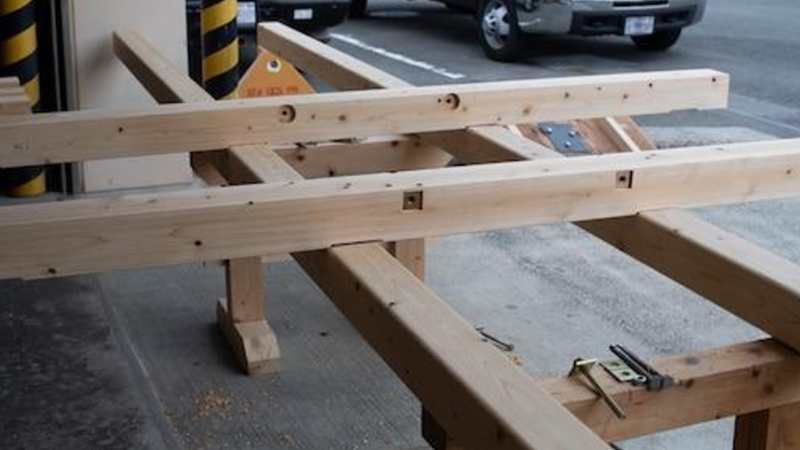
Many residential and timber-frame projects use timber door headers to support those structural load transitions above entryways and interior openings. The timber header spans the width of the doorway while transferring roof and wall loads into the surrounding framing members instead of allowing force to concentrate directly above the opening. Timber fabricators also customize header depth, beam dimensions, wood species, and joinery details so the support aligns with both engineering requirements and architectural design goals. That custom fabrication becomes especially important in wide entryways, open-concept floor plans, and exposed timber-frame construction where the header remains visible after installation.
The combination of structural performance and exposed wood aesthetics makes timber headers common in vaulted entryways, covered exterior entrances, timber-frame homes, and large interior transitions between living spaces. Builders maintain wider uninterrupted openings without relying solely on concealed steel framing that changes the visual character of natural wood construction. Custom timber manufacturing also allows doorway supports to integrate cleanly with surrounding beams, posts, and trim profiles across the entire structure.
Why Timber Earns a Place Over Concealed Steel
There are plenty of ways to span a door opening. Steel lintels, engineered laminated veneer lumber, and built-up dimensional members all do the job from a pure engineering standpoint. What sets a true timber header apart is the way it integrates with the rest of an exposed-wood interior. In a timber-frame great room, a concealed steel beam interrupts the architectural language even when it is wrapped in trim. A properly sized solid timber, or an engineered box section faced with matching wood, continues the conversation already started by the rafters, posts, and beams in the room. The structure becomes part of the design rather than a problem hidden behind drywall.
Steel Reinforcement Where It Belongs
For unusually wide openings or heavy load conditions, fabricators often combine timber with internal steel reinforcement. A flitch plate concealed inside a routed slot can dramatically increase load capacity without changing the visible cross-section of the beam. The result is a member that looks entirely like wood from the room and behaves like a hybrid section under load. That kind of detail allows architects to push openings wider than solid timber alone would safely allow.
The Material Behind the Member
A timber header is only as good as the wood it is cut from. Species, grain orientation, moisture content, and the absence of defects all matter when a beam will sit above a working doorway for the life of the home. Many homeowners working on rural builds, custom homes, or extensive site work coordinate with local arborists and lumber sources well before framing begins. In some regions, that coordination starts with site preparation and the responsible removal of trees that will not survive the construction process. Resources that list established tree service companies in Milwaukee, for example, illustrate how regional providers help homeowners manage trees that need to come down, sometimes generating salvageable logs that can be milled into beams, headers, or trim. Sourcing thoughtfully at the front of a project tends to pay off when the framing crew finally raises the header into place.
Coordinating the Header With the Rest of the Envelope
A visible header is rarely the only piece of exposed wood on an exterior elevation. Once a designer commits to showing a substantial beam above the entry, the rest of the facade has to keep pace. Many craftsman, modern farmhouse, and contemporary timber-frame projects extend the same material language into siding choices, with planked or board-and-batten timber treatments wrapping around the rest of the structure. A practical overview on how timber cladding can transform a home’s exterior shows how those material choices work together at scale. When the header above the front door speaks the same language as the cladding beside it, the entry feels intentional rather than improvised, and the structural decision becomes inseparable from the architectural one.
The Tarriver Approach to Door Headers
Tarriver approaches door headers the way a careful structural engineer specifies them, starting with the actual span, load condition, and architectural context instead of relying on a generic stock size. The company cuts members from solid timber when the loads allow, or fabricates engineered box sections with internal reinforcement when wider openings require greater capacity. The rest of the project determines species selection, so a header for a Douglas fir timber-frame great room naturally matches that setting, while a header for a white-oak vaulted entry complements the surrounding cabinetry and beams. Tarriver also coordinates connection details with the framing crew in advance, including pocket dimensions, bearing requirements, and any concealed hardware. As a result, the team delivers a member that arrives on site ready to fit cleanly, carry its load reliably, and look appropriate above the doorway throughout the life of the home.
Conclusion
Large door openings need structural wood support because the very act of widening a doorway breaks the load path that the surrounding wall used to provide, and because the member that replaces it is one of the most visible structural decisions in the home. A properly engineered timber header carries the roof and floors above with quiet confidence, holds its shape across seasons, and continues the architectural conversation already started by the rest of the exposed wood in the house. Whether the project is a craftsman entry, a vaulted great room, or a wide patio transition, the choice to span the opening with a thoughtfully made timber beam is one of those decisions that pays back every time someone walks through the door.