
Molecular Mechanisms and Preclinical Dynamics of Peptide-Mediated Tissue Repair
In recent years, regenerative biology, molecular medicine, and preclinical physiology have increasingly focused on the complex cellular signaling pathways governing tissue restoration, angiogenesis, and extracellular matrix remodeling. Among the most widely investigated molecular candidates in these experimental models are synthetic peptide sequences that modulate growth factor expression, cellular migration, and localized inflammatory responses. Scientific interest in preclinical tissue repair peptides has grown exponentially as researchers examine combinatorial approaches to wound healing, musculoskeletal regeneration, cytoprotection, and ischemic injury models.
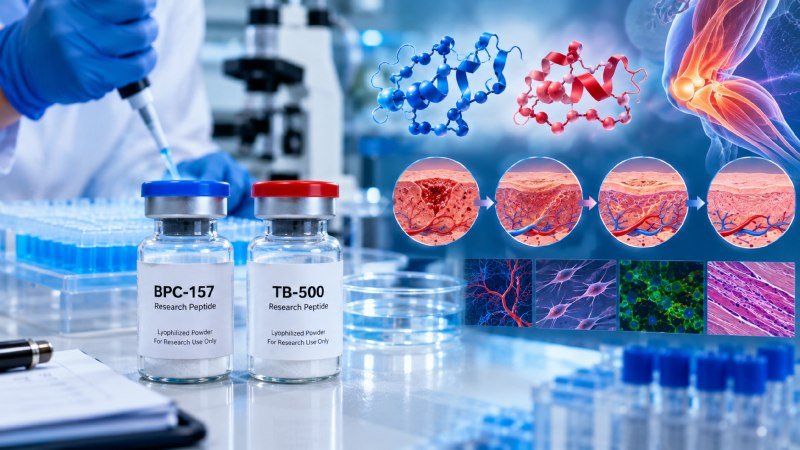
Preclinical models investigating tissue repair frequently examine the delicate interplay between actin filament organization, endothelial cell migration, and collagen deposition across diverse tissue types. Two specific synthetic compounds that have received significant attention across biomedical literature are Body Protection Compound-157 (BPC-157) and Thymosin Beta-4 / TB-500 derivatives. While each peptide operates through distinct biochemical cascades, their parallel evaluation in preclinical trials provides valuable insights into multi-pathway tissue remodeling mechanisms and cell survival strategies.
Molecular Mechanisms of BPC-157 in Preclinical Models
BPC-157 is a stable synthetic 15-amino acid pentadecapeptide derived from a naturally occurring protective peptide fragment found in human gastric juice. In preclinical animal models and in vitro cellular assays, researchers have investigated its role in accelerating the functional healing of diverse tissues, including tendons, ligaments, skeletal muscle, bone, and gastrointestinal mucosa.
At the molecular level, BPC-157 has been observed to modulate several critical signaling pathways:
- Angiogenic Upregulation: Studies indicate that BPC-157 promotes the expression of vascular endothelial growth factor (VEGF) and early growth response 1 (Egr-1), facilitating the rapid formation of functional microvasculature and capillary networks in ischemic or damaged tissues.
- Nitric Oxide (NO) System Regulation: The peptide appears to interact directly with the nitric oxide synthase system, stabilizing vascular tone, regulating blood pressure homeostasis, and maintaining tissue perfusion during acute inflammatory stress.
- FAK-Paxillin Pathway Activation: In tendon fibroblast and epithelial cell cultures, BPC-157 has been demonstrated to promote cellular outgrowth, spreading, and migration through the targeted phosphorylation of focal adhesion kinase (FAK) and paxillin proteins.
TB-500 and Actin Cytoskeletal Dynamics
TB-500 represents a synthetic derivative corresponding to the active phosphorylation domain of Thymosin Beta-4, a major G-actin sequestering protein present in almost all human and mammalian cells. By regulating the intracellular pool of unpolymerized actin, TB-500 plays a pivotal role in cellular locomotion, lamellipodia formation, and rapid structural remodeling following mechanical disruption or cellular trauma.
In tissue repair assays, TB-500 is primarily studied for its ability to enhance cell migration across dense extracellular matrix boundaries. It facilitates the rapid mobilization of endothelial cells, keratinocytes, and myoblasts to sites of injury without inducing excessive fibrous scar formation or keloid development. Additionally, preclinical findings indicate that TB-500 downregulates pro-inflammatory cytokines such as TNF-alpha, TGF-beta, and IL-6, creating an optimized biochemical microenvironment for physiological tissue regeneration rather than disordered collagen accumulation.
Investigating Synergistic Mechanisms in Experimental Protocols
When evaluated together in experimental preclinical settings, researchers hypothesize that combining BPC-157 and TB-500 targets complementary phases of the standard wound healing cascade. While BPC-157 supports early angiogenic sprouting, blood flow restoration, and early fibroblast proliferation, TB-500 facilitates rapid cellular motility, cytoskeletal restructuring, and the mitigation of acute inflammatory signaling cascades.
Standardized laboratory protocols require precise chemical characterization when studying these sequences in tandem. Researchers must utilize peptide reagents with confirmed chromatographic purity above 98% and verified mass-to-charge ratios to ensure experimental reproducibility across varied assay conditions. Researchers should reconstitute lyophilized peptide preparations using sterile laboratory solvents and strictly minimize freeze-thaw cycles to prevent hydrolytic peptide degradation.
Scientific Summary and Ongoing Research Directions
The study of synthetic peptides in preclinical tissue restoration continues to yield vital data on cellular dynamics, extracellular matrix biology, and regenerative physiology. As analytical research methodologies advance, rigorous testing frameworks and well-controlled in vitro and in vivo models will remain essential for delineating the specific molecular mechanisms that govern peptide-mediated tissue repair cascades.