
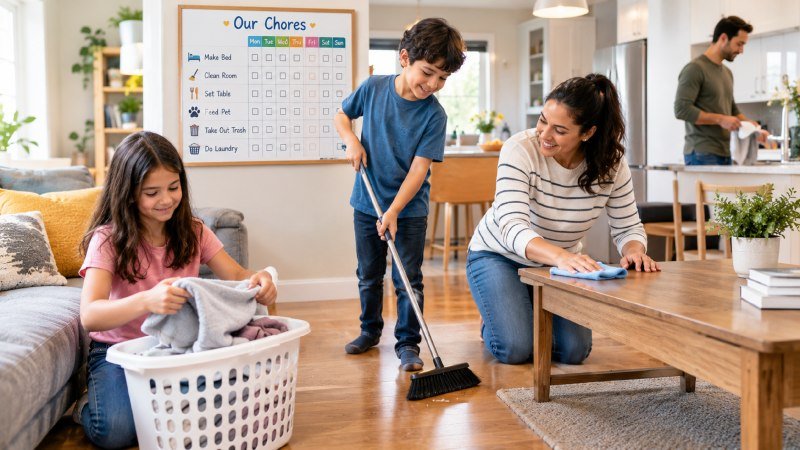
Building A Family Chore System That Teaches Kids Real-Life Skills
A family chore system is not about turning children into perfect cleaners. It is a practical way to help everyone contribute to the home while children practice independence, responsibility, and everyday problem-solving. When household jobs are shared, routines for recurring and deep cleaning can also feel more manageable for the adults in the household. It can also reduce the feeling that one person is responsible for noticing, planning, and completing every task. Even small contributions, repeated regularly, can make shared spaces easier to maintain.
The most effective systems are simple, visible, and flexible enough to fit school, work, activities, and rest. A child does not need a long list of jobs to benefit. One regular responsibility, taught clearly and practiced over time, can build a useful habit. The aim is consistency rather than perfection: a short task completed as part of a dependable routine is often more valuable than an occasional burst of practice opportunities.
Why Family Chore Systems Work
Children often respond better to a predictable routine than to repeated reminders. A regular job gives them a defined role in the household: they are not merely helping when asked, they are taking ownership of something that affects everyone. Chores can also be a place to practice responsibility, cooperation, and confidence. Everyday tasks may help children develop empathy and a sense of contribution, as discussed in reporting on the power of chores for children.
Predictability matters because children can anticipate what comes next. For instance, clearing a plate after dinner or feeding a pet before homework becomes less of a negotiation when it is simply part of the family’s usual rhythm. A visible routine also allows adults to provide fewer reminders and spend more time teaching the skill itself.
Keep the goal realistic. A beginner may leave crumbs near the dustpan, fold shirts unevenly, or forget a step. Those are opportunities for practice, not proof that the child cannot handle responsibility. If a task is completed imperfectly but safely and with genuine effort, acknowledge what went well and explain one small improvement to try next time. This approach makes it easier for children to keep participating instead of feeling that their work will never be good enough.
How Chores Teach Real-Life Skills
Ordinary tasks can become small lessons in daily living. Packing a school bag teaches planning. Clearing dishes before bedtime teaches follow-through. Sorting laundry teaches categories, care for belongings, and preparation. These skills are transferable: children who learn to notice what needs attention at home can gradually become more capable of managing school materials, activities, and personal routines.
- Planning: Deciding what needs to happen first.
- Time management: Completing a task before school, dinner, or bedtime.
- Problem-solving: Finding a reasonable solution when supplies are missing.
- Self-care: Managing clothing, food, personal items, and personal space.
- Care for shared spaces: Recognizing that a home needs contributions from everyone who lives there.
For example, a child who needs clean sports clothes for Saturday learns that laundry cannot always be a last-minute request. They may need to put clothes in the hamper, check whether a load is needed, and plan ahead. Similarly, a teenager who helps prepare one dinner can learn to read directions, gather ingredients, clean as they go, and recognize when an item is running low.
How To Choose The Right Tasks
Age is a useful starting point, but ability, safety, attention span, and the family’s routine matter more. Before assigning a task, ask:
- Can the child complete it safely?
- Can it be explained in a few clear steps?
- Is there enough time to finish it without rushing?
- Will it teach a useful skill?
It also helps to consider the setup. A task is easier to complete independently when supplies are accessible, and the child knows where everything belongs. Keep a lightweight step stool, child-sized dustpan, labeled bins, or simple cleaning cloths available when appropriate. The environment should support success rather than require a child to ask an adult for every item or instruction.
Start with one consistent task, then add responsibilities after it becomes familiar. Avoid assigning work that requires unsupervised use of harsh cleaning products, sharp tools, hot appliances, ladders, or outdoor equipment. Tasks can be adapted when needed; for example, a child who finds folding difficult may sort clean socks or match towels before taking on more detailed laundry jobs.
Age-Based Chore Ideas
Young Children
- Put toys into labeled containers.
- Place dirty clothes in a hamper.
- Return books and shoes to their usual places.
- Wipe a low surface with a damp cloth.
- Help place napkins or unbreakable items on the table.
Young children often do best with short tasks, clear choices, and immediate guidance. A picture label or a simple “first this, then that” instruction can be more useful than a broad request to clean up.
Elementary-Age Children
- Make the bed and pack a backpack for the next day.
- Clear dishes, sort laundry, or empty small wastebaskets.
- Sweep a small area or help care for a family pet.
- Set out clothing or help prepare lunch items for the following day.
At this stage, children can often handle a sequence of two or three related steps. They may still need occasional reminders, especially during busy mornings, but a checklist can help them learn what “finished” looks like.
Tweens And Teenagers
- Load or unload the dishwasher, fold laundry, and vacuum a room.
- Clean a bathroom sink and mirror with appropriate products and guidance.
- Prepare a simple snack, side dish, or family meal.
- Plan a grocery list for one meal and maintain a personal room.
- Help manage recycling, take bins to the curb, or complete a larger weekend task.
Tweens and teenagers can also participate in the planning behind household work. Asking them to estimate how long a task will take, choose a convenient time to complete it, or identify needed supplies can build practical judgment alongside the chore itself.
How To Build A Simple Family System
1. List The Work That Keeps The Home Running
Write down daily, weekly, and occasional tasks. Include personal responsibilities, such as putting away belongings, alongside shared jobs, such as clearing the table. This list does not need to include every possible task at first. Focus on the work that causes the most stress when it is left undone, then build from there.
2. Match Jobs To Skills And Make Them Visible
Use a paper chart, whiteboard, or simple checklist. Every job needs a finish line. “Clean your room” is vague, while “put clothes in the hamper and books on the shelf” is clear. If several children share a space, specify which belongings or areas each person is responsible for so the task does not become an argument about fairness.
3. Teach Before Expecting Independence
Show the task, do it together, let the child try with guidance, then step back as confidence grows. Guidance on building chore habits similarly emphasizes routines, specific instructions, and gradual skill-building. Demonstrating the expected result is especially helpful for jobs like wiping a counter, loading a dishwasher, or putting laundry away, where adults may otherwise assume a child knows the details.
4. Review Once A Week
Ask what worked, what was difficult, and whether a job needs to change. The system should support family life, not become another source of stress. A quick family check-in can also make room for practical changes, such as swapping a task on a given day for an after-school activity or revisiting a job that has become either too easy or too difficult.
How To Avoid Daily Power Struggles
- Give one action at a time rather than a long lecture.
- Connect tasks to routines, such as after breakfast or before screen time.
- Praise effort, attention, and improvement.
- Do not redo ordinary beginner mistakes in front of the child.
- Adjust expectations during illness, unusually busy weeks, or periods of overwhelm.
Specific requests reduce confusion. Replace “Clean your room” with “Put the clothes in the hamper, then return the books to the shelf.” Calm, neutral language can help as well. Rather than framing a task as punishment, present it as a regular responsibility that belongs in the routine. If a child becomes frustrated, it may be more productive to pause, break the job into smaller parts, and return to it than to escalate the disagreement.
Should Kids Get Paid For Chores?
There is no single right answer. Many families treat basic responsibilities, such as clearing dishes or caring for personal belongings, as part of living together. Others offer payment for optional projects, such as washing the car or organizing a garage shelf. A balanced approach separates expected family contributions from extra work that can teach earning, saving, and spending. Whatever approach a family chooses, it helps to explain it clearly so children understand which responsibilities are non-negotiable and which opportunities are optional.
Common Questions From Parents
How Many Chores Should A Child Have?
Begin with one reliable task. Add more only when the child can complete it with reasonable consistency. Consider the child’s schedule and energy level, especially during transitions such as a new school year, sports season, or family move.
What If A Child Refuses To Help?
First, check whether the task is safe, clear, and realistic. Respond calmly, restate the routine, and avoid turning the moment into a lengthy argument. If refusal is frequent, look for patterns: the task may be too large, the timing may be difficult, or the child may need more practice before doing it alone.
Should Chores Stay The Same Every Week?
Fixed jobs can create ownership, while rotating jobs expose children to more skills. Many families use a combination of both. For example, a child might always be responsible for their own room, while shared jobs, such as setting the table or feeding a pet, rotate among family members.
Final Takeaway
A good family chore system is simple, fair, and flexible. With clear expectations, patient teaching, and time to practice, everyday household work can help children build skills they will use well beyond home. The system does not need to be elaborate to work. When children understand their role, have the tools to succeed, and know that mistakes are part of learning, chores can become a practical part of family life rather than a daily conflict.