
Understanding Oral Medications: How PDE5 Inhibitors Function
Erectile dysfunction (ED), commonly known as impotence, is a widespread health concern. By October 2026, it’s estimated that approximately 50% of men between the ages of 40 and 70 will experience some degree of this condition. While ED can significantly impact a man’s quality of life and relationships, the good news is that many effective drug treatments are available today.
Navigating the various options can feel overwhelming. We understand the importance of making informed decisions when it comes to your health. We will provide a comprehensive comparison of the main drug therapies used to treat impotence.
We will explore how these medications work, detailing their mechanisms and highlighting key differences in terms of onset, duration, and overall effectiveness. We will also discuss common side effects, potential risks, and important contraindications to be aware of. Furthermore, we will examine alternative drug treatments for those situations where initial therapies may not be suitable or effective. Our goal is to equip you with clear, actionable information to help you understand your choices and prepare for a productive discussion with your healthcare provider about the best path forward. For personalized guidance and expert impotence care, we always recommend consulting a qualified medical professional.
The most common and often first-line drug treatments for erectile dysfunction are oral medications known as phosphodiesterase type 5 (PDE5) inhibitors. This class of drugs includes well-known names such as sildenafil (Viagra), tadalafil (Cialis), and vardenafil (Levitra, Staxyn). Their primary mechanism of action revolves around enhancing the natural physiological process of an erection.
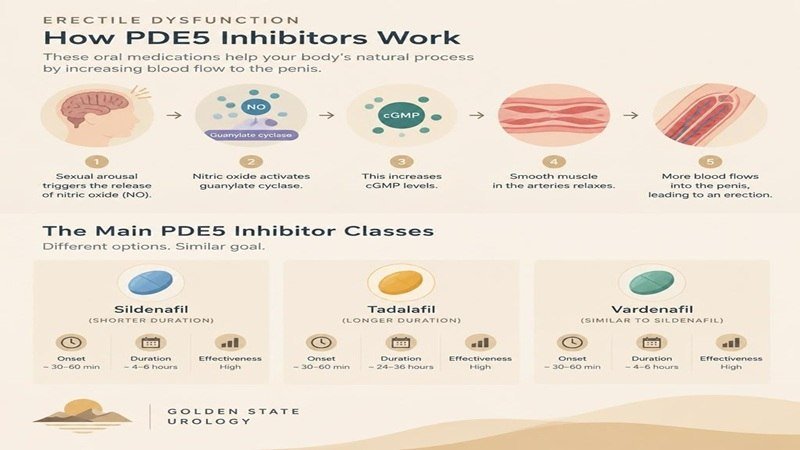
When a man is sexually aroused, the brain sends signals that lead to the release of nitric oxide (NO) in the penis. This nitric oxide activates an enzyme called guanylate cyclase, which in turn increases the production of cyclic guanosine monophosphate (cGMP). cGMP is a crucial molecule that causes the smooth muscle cells in the arteries of the penis, particularly within the corpus cavernosum (the spongy tissue that fills with blood during an erection), to relax. This relaxation allows for increased arterial inflow of blood into the penis, leading to engorgement and an erection.
However, an enzyme called phosphodiesterase type 5 (PDE5) is responsible for breaking down cGMP, thus ending the erection. PDE5 inhibitors work by temporarily blocking the action of this PDE5 enzyme. By inhibiting cGMP degradation, these drugs allow cGMP levels to remain elevated for a longer period. This sustained elevation of cGMP promotes prolonged smooth muscle relaxation and increased blood flow, making it easier to achieve and maintain an erection when sexual stimulation is present. PDE5 inhibitors do not cause an erection on their own; sexual stimulation is still required for them to be effective.
Clinical trials have shown that PDE5 inhibitors can be effective in up to 80% of men, though effectiveness can vary depending on the specific medication, dosage, and the underlying cause of ED. This high success rate makes them a cornerstone of modern ED treatment.
Comparing First-Line Oral Drugs: Sildenafil, Tadalafil, and Vardenafil
While all PDE5 inhibitors share a similar mechanism of action, they differ significantly in their pharmacokinetic profiles, which translates to variations in onset of action, duration of effect, and how they interact with food. These differences often guide treatment selection based on individual patient needs and lifestyle.
Pharmacokinetic Differences: Onset, Duration, and Food Interactions
Let’s compare the key characteristics of sildenafil, tadalafil, and vardenafil:
Feature Sildenafil (Viagra) Tadalafil (Cialis) Vardenafil (Levitra, Staxyn) Onset of Action ~30-60 minutes ~30-60 minutes ~15-60 minutes Peak Concentration ~60 minutes ~2 hours ~60 minutes Half-Life ~4 hours ~17.5 hours ~4-5 hours Duration of Effect ~4-6 hours Up to 36 hours (“weekend pill”) ~4-6 hours Food Effects High-fat meals can delay absorption & reduce Cmax Generally not affected by food High-fat meals can delay absorption & reduce Cmax PDE5 Selectivity Highly selective for PDE5, some PDE6 inhibition Highly selective for PDE5, some PDE11 inhibition Highly selective for PDE5, some PDE6 inhibition Sildenafil (Viagra) was the first PDE5 inhibitor approved by the FDA in 1998. It typically takes about 30 to 60 minutes to start working, and its effects generally last for approximately 4 to 6 hours. High-fat meals can significantly delay its absorption and reduce its peak plasma concentration, meaning it’s often recommended to take sildenafil on an empty stomach for optimal effect. Sildenafil also exhibits some inhibition of PDE6, an enzyme found in the retina, which can lead to transient visual disturbances like a bluish tinge to vision in some users. Over 3,700 patients participated in pre-marketing clinical trials for sildenafil, demonstrating its extensive testing.
Tadalafil (Cialis) stands out due to its remarkably long duration of action, lasting up to 36 hours, earning it the nickname “the weekend pill.” Its onset is similar to sildenafil, around 30-60 minutes, but its longer half-life (approximately 17.5 hours) provides a wider therapeutic window. This allows for more spontaneity, as it doesn’t need to be timed precisely before sexual activity. Tadalafil’s absorption is generally not affected by food, offering greater flexibility. It also has some inhibitory effect on PDE11, an enzyme found in muscle tissue, which has been linked to potential muscle aches in some individuals, though this is usually mild and temporary.
Vardenafil (Levitra, Staxyn) has a pharmacokinetic profile quite similar to sildenafil, with an onset of action around 15-60 minutes and a duration of effect of about 4 to 6 hours. Like sildenafil, its absorption can be delayed and its effectiveness potentially reduced by high-fat meals. Vardenafil is also highly selective for PDE5, with some PDE6 inhibition, similar to sildenafil, which can lead to similar mild visual side effects in a small percentage of users.
In terms of overall clinical efficacy, all three agents have demonstrated significant improvement in erectile function compared to placebo. Patient preference studies, while sometimes limited by study design, often indicate a slight preference for tadalafil due to its extended duration and flexibility. However, the “best” choice ultimately depends on a patient’s specific needs, lifestyle, and how they respond to each medication.
Safety Profiles, Drug Interactions, and Contraindications
While generally safe and well-tolerated, PDE5 inhibitors carry common side effects, serious risks, and crucial contraindications that necessitate careful medical evaluation before use.
Common Side Effects: The most frequently reported adverse reactions in clinical trials (occurring in 2% or more of patients) across PDE5 inhibitors include headache, flushing, dyspepsia (indigestion), abnormal vision (especially with sildenafil and vardenafil, often described as a bluish tint or blurred vision), nasal congestion, back pain, myalgia (muscle aches, more common with tadalafil), nausea, dizziness, and rash. These side effects are usually mild and transient.
Serious Risks:
- Priapism: A prolonged erection lasting more than 4 hours is a rare but serious medical emergency. If left untreated, it can cause permanent damage to the penis.
- Non-Arteritic Anterior Ischemic Optic Neuropathy (NAION): This rare condition involves sudden vision loss in one or both eyes due to reduced blood flow to the optic nerve. The annual incidence of NAION is 2.5-11.8 cases per 100,000 in males aged ≥ 50. Observational studies suggest an approximate 2-fold increase in the risk of NAION with PDE5 inhibitor use, with a risk estimate of 2.15 (95% CI 1.06, 4.34). Patients experiencing sudden vision loss should seek immediate medical attention.
- Sudden Hearing Loss: Rare cases of sudden decrease or loss of hearing, sometimes accompanied by tinnitus (ringing in the ears) and dizziness, have been reported. Patients should discontinue the medication and seek prompt medical attention if this occurs.
- Cardiovascular Events: While PDE5 inhibitors are generally safe for most men with stable cardiovascular disease, they can lower blood pressure. Patients with unstable angina, recent heart attack or stroke, severe heart failure, or uncontrolled high blood pressure or hypotension are typically advised against their use.
Drug Interactions:
- Nitrates: The most critical contraindication is the concomitant use of any form of organic nitrates (e.g., nitroglycerin, isosorbide dinitrate, isosorbide mononitrate), which are often prescribed for chest pain (angina). PDE5 inhibitors significantly potentiate the hypotensive effects of nitrates, leading to a dangerous and potentially fatal drop in blood pressure. This interaction is absolute.
- Alpha-blockers: Medications used to treat high blood pressure or enlarged prostate (benign prostatic hyperplasia, BPH), such as tamsulosin or doxazosin, can also lower blood pressure. Combining them with PDE5 inhibitors can lead to symptomatic hypotension (dizziness, lightheadedness, fainting). If co-administration is necessary, it should be done cautiously, often starting with the lowest dose of the PDE5 inhibitor and ensuring the patient is on a stable alpha-blocker regimen.
- CYP3A4 Inhibitors: Certain medications, particularly strong inhibitors of the cytochrome P450 3A4 enzyme (CYP3A4), can significantly increase the plasma levels of PDE5 inhibitors. Examples include some antifungal medications (ketoconazole, itraconazole), antibiotics (erythromycin, clarithromycin), and HIV protease inhibitors (ritonavir, saquinavir). For instance, concomitant administration of ritonavir increases sildenafil AUC (area under the curve, a measure of drug exposure) 11-fold, necessitating significant dose reduction of sildenafil.
- Amlodipine: Co-administration of sildenafil 100 mg with amlodipine 5 mg or 10 mg resulted in a mean additional blood pressure reduction of 8 mmHg systolic and 7 mmHg diastolic. While generally manageable, this highlights the need for caution in patients already on antihypertensive therapy.
Contraindications:
- Nitrate Use: As mentioned, absolute contraindication.
- Hypersensitivity: Known allergic reaction to the active ingredient or any component of the tablet.
- Guanylate Cyclase (GC) Stimulators: Co-administration with riociguat (Adempas), a GC stimulator used for pulmonary hypertension, is contraindicated due to the risk of severe hypotension.
In placebo-controlled clinical trials, the discontinuation rate due to adverse reactions for sildenafil (2.5%) was not significantly different from placebo (2.3%), indicating a generally favorable safety profile for most users when prescribed appropriately. However, a thorough medical history and physical examination are essential before initiating any PDE5 inhibitor therapy to identify potential risks and contraindications.
Second-Line and Alternative Medications for Impotence
For patients who do not respond to oral PDE5 inhibitors, or for whom these medications are contraindicated, several effective second-line and alternative drug treatments are available. These options often involve different mechanisms of action and routes of administration, requiring specialist evaluation and guidance.
Local Vasodilators: Intracavernosal Injections and Intraurethral Pellets
When oral medications are ineffective or unsuitable, local vasodilator therapies directly applied to the penis can be highly effective. The primary drug used in this category is alprostadil, a synthetic form of prostaglandin E1 (PGE1).
- Intracavernosal Injections: This method involves injecting alprostadil directly into the corpus cavernosum of the penis using a very fine needle. Alprostadil acts as a potent vasodilator, directly relaxing the smooth muscles within the penile arteries and increasing blood flow, leading to an erection within 5-20 minutes. It bypasses the need for nitric oxide release from nerves, making it effective even in cases of severe nerve damage or vascular disease. Patients are taught how to self-administer the injection, and the dose is carefully titrated by a healthcare provider. Side effects can include penile pain, bruising, and, rarely, priapism (prolonged erection).
- Intraurethral Suppositories (Muse): Alprostadil can also be administered as a small pellet inserted into the urethra. This method, while less invasive than injection, is generally less effective than intracavernosal injections. The alprostadil is absorbed through the urethral lining and diffuses into the surrounding penile tissue to promote vasodilation. Onset of action is typically 5-10 minutes, and the erection lasts for about 30-60 minutes. Side effects can include urethral pain, penile pain, and dizziness.
Both intracavernosal injections and intraurethral pellets offer a reliable solution for many men who don’t respond to oral PDE5 inhibitors, providing a direct physiological pathway to achieve an erection.
Hormone Optimization: The Role of Testosterone Replacement Therapy
Testosterone is a crucial hormone for male sexual health, influencing libido, energy levels, and erectile function. However, testosterone therapy is not a direct treatment for ED in the same way PDE5 inhibitors are. Its role is primarily to address underlying hypogonadism, a condition characterized by abnormally low serum testosterone levels.
When a patient presents with ED and also has confirmed low testosterone, testosterone replacement therapy (TRT) may be considered. The primary benefit of TRT in this context is often the restoration of libido and overall sexual desire. While TRT can improve erectile function in some men with hypogonadism, it is generally less effective than PDE5 inhibitors for directly achieving erections. For many men with low testosterone and ED, a combination therapy of TRT to restore libido and a PDE5 inhibitor for erectile rigidity may be the most effective approach.
TRT is administered via various methods, including injections, gels, patches, or pellets. Before initiating TRT, comprehensive endocrine monitoring is essential, including baseline and regular follow-up measurements of total and free testosterone, prostate-specific antigen (PSA), and hematocrit. This monitoring helps ensure the therapy is safe and effective and to manage potential side effects such as prostate enlargement, increased red blood cell count, and cardiovascular risks. Testosterone therapy is typically only appropriate when a genuine testosterone deficiency is confirmed, and it is not recommended for men with normal testosterone levels whose ED is due to other causes.
Integrating Medical Protocols for Expert Impotence Care
Effective management of impotence requires a nuanced approach, integrating various medical protocols tailored to each patient’s unique health profile. This often involves a stepwise clinical algorithm, starting with less invasive options and escalating as needed, all under the guidance of a specialist. Individualized titration of medications and ongoing specialist oversight are paramount to optimize outcomes and ensure safety.
For comprehensive and expert impotence care, consulting with a urologist or a specialist in men’s health is crucial. These professionals can conduct thorough evaluations, interpret complex medical histories, and recommend the most appropriate treatment pathways, ensuring that all aspects of a patient’s health are considered.
Navigating Patient Health Profiles in Expert Impotence Care
The choice and dosage of ED medications are heavily influenced by a patient’s overall health status and existing medical conditions.
- Cardiovascular Risk: Patients with cardiovascular disease require careful assessment. While PDE5 inhibitors are generally safe for men with stable heart conditions, those with unstable angina, recent myocardial infarction (heart attack) or stroke, severe heart failure, or uncontrolled arrhythmias may be contraindicated. The hypotensive effects of PDE5 inhibitors must be considered, especially if the patient is on multiple antihypertensive medications.
- Diabetic Vasculopathy: Diabetes is a common cause of ED due to damage to blood vessels and nerves. Men with diabetic vasculopathy may require higher doses of PDE5 inhibitors or may respond less effectively, necessitating alternative treatments like alprostadil injections. Careful management of blood glucose levels is also crucial, as improved diabetes control can sometimes enhance erectile function.
- Renal Impairment: Kidney disease can affect how the body processes and eliminates medications. For patients with severe renal impairment, lower starting doses of PDE5 inhibitors (e.g., 25 mg sildenafil) are often recommended, as drug clearance may be reduced, leading to higher plasma concentrations and increased risk of side effects.
- Hepatic Clearance: Liver impairment can also affect drug metabolism. Patients with severe hepatic impairment may require dose adjustments for PDE5 inhibitors, as these drugs are primarily metabolized by the liver.
- Post-Prostatectomy Care: Men who have undergone radical prostatectomy for prostate cancer often experience ED due to nerve damage. While nerve-sparing techniques can preserve some erectile function, many still benefit from PDE5 inhibitors, especially as part of a penile rehabilitation program. The response rate may be lower, and some may eventually require penile injections or implants.
A detailed understanding of these health profiles allows healthcare providers to safely and effectively prescribe or recommend appropriate treatments, minimizing risks and maximizing therapeutic benefits.
Combining Lifestyle Changes, Therapy, and Expert Impotence Care
Medication is a powerful tool, but it’s often most effective when integrated with non-pharmacological approaches. Addressing underlying lifestyle factors and psychological components can significantly enhance treatment outcomes and overall well-being.
- Lifestyle Changes: Simple modifications can have a profound impact. Regular exercise, a healthy diet (rich in fruits, vegetables, and whole grains), maintaining a healthy weight, quitting smoking, and reducing excessive alcohol intake can improve cardiovascular health, which is intrinsically linked to erectile function. These changes can sometimes improve ED even without medication, or at least enhance the effectiveness of drug treatments.
- Psychosexual Counseling: Approximately 10% to 20% of ED cases are caused primarily by psychological factors such as stress, anxiety (including performance anxiety), depression, or relationship issues. In these situations, psychosexual therapy or counseling can be invaluable. A therapist can help individuals and couples address emotional barriers, improve communication, and reduce performance pressure, often leading to significant improvement in sexual function. This can be used alone or in conjunction with medication.
- Emerging and Experimental Treatments: The field of ED treatment is continuously evolving.
- Low-Intensity Extracorporeal Shockwave Therapy (LI-ESWT): This non-invasive therapy involves delivering low-intensity sound waves to the penis to stimulate neovascularization (formation of new blood vessels) and improve blood flow. While promising, especially for men with vasculogenic ED, it remains largely experimental in October 2026, with ongoing research to establish long-term efficacy and standardized protocols.
- Regenerative Research (e.g., Stem Cell Therapy, Platelet-Rich Plasma): These cutting-edge therapies aim to repair damaged penile tissue or improve its function by introducing growth factors or stem cells. Platelet-rich plasma (PRP) involves injecting a concentration of a patient’s own platelets, rich in growth factors, into the penis. Stem cell therapy, often using adipose-derived mesenchymal stem cells, seeks to regenerate damaged tissue. While showing promise in early studies, these treatments are still largely experimental, not FDA-approved for ED, and require more robust clinical trials to confirm safety and long-term effectiveness.
Integrating these diverse strategies—from medication to lifestyle adjustments and psychological support—provides a holistic approach to managing ED, ensuring that all contributing factors are addressed for the best possible patient outcomes.
Frequently Asked Questions About Impotence Medications
Patients often have specific questions regarding the practical aspects of using ED medications. Here, we address some common concerns.
Can PDE5 inhibitors be taken alongside blood pressure medications?
This is a critical question, as many men with ED also have hypertension and take blood pressure medications. The answer is complex: it depends on the specific blood pressure medication and the patient’s overall cardiovascular health.
PDE5 inhibitors themselves can cause a mild reduction in blood pressure. When combined with certain antihypertensives, this effect can be additive, potentially leading to symptomatic hypotension (a significant drop in blood pressure causing dizziness, lightheadedness, or fainting).
- Alpha-blockers: As discussed, medications like tamsulosin, doxazosin, or prazosin, often prescribed for high blood pressure or benign prostatic hyperplasia (BPH), can significantly lower blood pressure. Combining them with PDE5 inhibitors is generally contraindicated or requires extreme caution, often with a reduced starting dose of the PDE5 inhibitor and ensuring the patient is on a stable alpha-blocker regimen.
- Other Antihypertensives: For other classes of blood pressure medications (e.g., ACE inhibitors, ARBs, beta-blockers, calcium channel blockers like amlodipine), the interaction is generally less severe than with alpha-blockers. However, caution is still advised. For example, sildenafil 100 mg co-administered with amlodipine 5 mg or 10 mg resulted in a mean additional blood pressure reduction of 8 mmHg systolic and 7 mmHg diastolic. While this might be well-tolerated by some, it could be problematic for others, especially those prone to orthostatic hypotension.
The key is open communication with your healthcare provider. They will assess your cardiovascular status, the specific blood pressure medications you are taking, and determine if PDE5 inhibitors can be safely integrated into your treatment plan, possibly with dose adjustments or staggered administration.
What alternatives exist if oral ED drugs fail completely?
If oral PDE5 inhibitors prove ineffective or are contraindicated, a range of alternative treatments can still help restore erectile function. “Failure” of oral drugs doesn’t mean the end of options; it simply means it’s time to explore other avenues, typically through clinical reassessment with a specialist.
- Vacuum Erection Devices (VEDs): These non-invasive devices consist of a plastic cylinder placed over the penis, creating a vacuum that draws blood into the penis. A constriction ring is then placed at the base of the penis to maintain the erection. VEDs are generally safe and effective for many men, offering a drug-free option.
- Penile Injections (Alprostadil): As previously discussed, intracavernosal injections of alprostadil are highly effective, often working when oral medications do not. They induce an erection within minutes and can be a reliable option for many men.
- Intraurethral Suppositories (Alprostadil): While generally less effective than injections, these offer a less invasive way to administer alprostadil directly into the urethra.
- Penile Implants (Prostheses): For men with severe ED that doesn’t respond to other treatments, a penile implant is a surgical option that provides a permanent mechanical solution. These devices, either inflatable or malleable, are surgically placed inside the penis, allowing for reliable erections on demand. This is typically considered a last resort after all less-invasive options have been exhausted.
- Hormone Therapy (if applicable): If low testosterone is a contributing factor, testosterone replacement therapy can improve libido and sometimes erectile response, often in combination with other treatments.
A thorough reassessment by a urologist can help determine the most appropriate next step, considering the cause of the ED, patient preferences, and overall health.
How does food impact the effectiveness of different ED pills?
The presence of food in the stomach can influence how quickly and effectively ED medications are absorbed into the bloodstream. This is primarily due to effects on gastric absorption and the rate at which the drug reaches its peak plasma concentration (Cmax).
- Sildenafil (Viagra) and Vardenafil (Levitra, Staxyn): These medications are more sensitive to food intake, particularly high-fat meals. A fatty meal can significantly delay the gastric absorption of sildenafil, postponing its time to maximum concentration (Tmax) by about 60 minutes and reducing its Cmax by roughly 29%. This means the drug may take longer to work and might not reach its full potential effectiveness if taken with a heavy meal. Therefore, it’s generally recommended to take sildenafil and vardenafil on an empty stomach, or at least avoid high-fat meals, for optimal results.
- Tadalafil (Cialis): In contrast, tadalafil’s absorption is generally not affected by food. This offers greater flexibility, allowing patients to take it with or without meals without significantly impacting its onset or effectiveness. This is one of the reasons tadalafil is often favored for its convenience and spontaneity.
Understanding these differences helps patients optimize the use of their prescribed medication, ensuring they achieve the best possible therapeutic effect. Always follow your doctor’s specific instructions regarding medication timing relative to meals.
Conclusion
The landscape of drug treatments for impotence has evolved significantly, offering a wide array of effective options for men experiencing erectile dysfunction. From the widely used PDE5 inhibitors like sildenafil, tadalafil, and vardenafil, which enhance natural erectile responses, to local vasodilators such as alprostadil injections, and hormone optimization with testosterone therapy, numerous pathways exist to restore sexual function and improve quality of life.
While PDE5 inhibitors share a common mechanism, their pharmacokinetic differences in onset, duration, and food interactions are crucial for personalized treatment selection. Understanding their common side effects, serious risks like NAION and priapism, and critical contraindications (especially with nitrates) is paramount for safe use.
Beyond medication, lifestyle changes, psychological therapy, and emerging treatments like shockwave therapy and regenerative medicine play vital roles in a comprehensive management plan. The journey to finding the right treatment is highly personal, emphasizing the importance of a thorough clinical evaluation, individualized titration, and ongoing safety monitoring. Effective management of impotence hinges on a collaborative approach between the patient and a qualified healthcare professional, ensuring therapeutic efficacy aligned with individual needs and preferences.