Ways to Preserve Parenting Memories Across Your Kid’s Life
Ways to Preserve Parenting Memories Across Your Kid’s Life
How many memories from your own childhood do you actually remember with perfect clarity? Most parents realize that specific moments blur together over time, which is why deliberately preserving parenting memories has become increasingly important. From first days of school to teenage milestones, children grow quickly, and the details that feel so vivid today may fade without intentional effort. Creating a system to capture and organize these memories ensures that both you and your child can revisit meaningful moments for years to come.
1. Create a Digital Photo Library with Organization Systems
Digital photography has made it easier than ever to capture countless images, but convenience can lead to disorganization. Creating a dedicated photo library with a clear folder structure ensures you can actually find specific memories when you want to revisit them. Consider organizing folders by year, then by month or event type, so that searching for “first day of kindergarten” or “summer vacation 2023” takes seconds rather than hours of scrolling. Cloud storage services automatically back up your photos, protecting against accidental deletion or device failure that could wipe out irreplaceable images.
Beyond simple organization, adding metadata such as dates, locations, and brief descriptions transforms a photo collection into a searchable archive. Many modern phones automatically tag photos with location data and timestamps, but taking an extra moment to add context about who was present or what was happening creates richer memories. A photo labeled simply “beach trip” tells you less than one tagged with “Sarah’s eighth birthday beach trip with cousins, June 2024.” This extra detail becomes invaluable when you want to recall specific feelings or relationships from that moment.
2. Maintain Written Journals or Memory Journals
Writing serves a different memory function than photos alone. A journal captures your thoughts, emotions, and observations about parenting moments that photos cannot convey. Recording your child’s funny sayings, developmental milestones, or your own reflections on parenting creates a personal narrative that exists independently from images. Even brief entries written just a few times per month provide a remarkably detailed portrait of your child’s growth and your experience as a parent across different life stages.
Dedicated memory journal apps and structured templates make this practice more manageable than traditional journaling. Some parents keep a simple notebook by their bedside and write for five minutes before sleep, jotting down something memorable from the day. Others prefer structured prompts such as “What made me laugh today?” or “What challenge did my child overcome this week?” The format matters less than consistency, since a journal maintained sporadically over many years still creates a meaningful record that your child may treasure as they grow older and become curious about their own early history.
3. Develop a Video Documentation Practice
Video captures elements of childhood that still photos cannot. Your child’s voice, mannerisms, the way they move, and their personality shine through in video in ways that photographs struggle to convey. Recording short clips of ordinary moments, not just major events, creates a vivid time capsule; filming your child singing a favorite song, playing with a pet, or explaining a creative project preserves their personality at that particular age far more fully than a still image. Smartphone videos are typically sufficient for personal memory keeping, so expensive equipment is unnecessary.
Setting aside time each month to record a few short clips ensures you capture your child across different ages and developmental stages. Annual videos, such as recording your child answering the same questions each birthday or documenting their height against a doorframe, create a natural progression that carries real meaning when reviewed years later. These video moments become especially precious as children grow older and personalities shift dramatically from one year to the next.
4. Create Physical Keepsakes and Memory Boxes
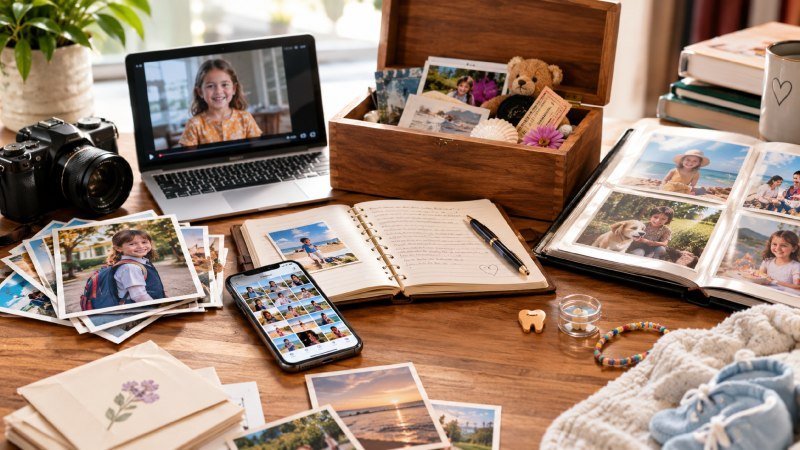
While digital storage is important, physical keepsakes hold unique emotional value. Creating a memory box for each year or each child gives you a tangible place to collect items that represent that period. Ticket stubs from movies you attended together, artwork your child created, certificates from achievements, and handwritten notes all fit into a shoe box or small storage container. These three-dimensional objects can transport you back to specific moments more powerfully than digital files, triggering sensory memories that dates and file names alone cannot.
During the nursing stage of early parenthood, many mothers choose to honor that fleeting and intimate bond through wearable art. Keepsake Mom’s long-lasting breastmilk jewelry enables them to carry that memory in a tangible, enduring form long after weaning. Consider creating an annual tradition where you fill the memory box together with your child, involving them in the selection process so they learn to reflect on meaningful moments. A five year old might choose a favorite drawing and a ticket from a special outing, while a teenager might include a program from a school event and a photo with friends. When your child eventually becomes an adult, these physical keepsakes will travel with them as a record of their childhood and your relationship.
5. Document Milestones with Structured Records
Certain milestones warrant more formal documentation than everyday memories. First days of school, graduations, achievements, and significant growth moments deserve intentional capture and recording. Creating a milestone tracker helps ensure you do not overlook important events that happen only once in your child’s life, including first words, first steps, the first day of each school year, losing baby teeth, and earning awards. For each milestone, capturing a photo, a brief written description, and a short video clip provides a multisensory record that you can revisit in different ways depending on what triggers the most vivid recollection.
Many families also create an annual birthday document noting height, current interests, favorite activities, and parental observations, which builds a natural chronological record of growth and development. This structured approach complements spontaneous everyday documentation and ensures that once-in-a-lifetime moments receive the attention they deserve. Taken together, milestone records and casual daily captures form a complete picture of your child’s life rather than a collection of highlights alone.
6. Share and Preserve Family Stories Through Recording
Beyond visual documentation, preserving family stories and cultural history enriches memory keeping considerably. Recording yourself or older family members telling stories about your child’s birth, family history, or significant family events creates an audio archive of voices and narratives that would otherwise be lost. Your voice, telling the story of the day your child was born or explaining long-standing family traditions, becomes a precious artifact as time passes. Grandparents sharing memories about your child’s parents when they were young adds layers of family continuity and identity that no photo album can fully replicate.
Technology makes this remarkably simple. Audio recordings or video interviews capture these narratives without requiring special skills or equipment. Some families schedule annual interview sessions where they ask their children questions about the past year, their aspirations, or their observations about family life. These recordings preserve your child’s voice and perspective at different ages while also documenting family relationships that might otherwise fade from collective memory.
Conclusion
Preserving parenting memories requires intentional effort, but the reward extends far beyond personal nostalgia. A comprehensive approach combining digital organization, written reflection, video documentation, physical keepsakes, milestone tracking, and family storytelling creates a rich, multifaceted record of your child’s growth and your parenting journey. These records serve as gifts not just to yourself but to your child, who will eventually treasure evidence of their own history and the care invested in documenting their life. The moments that feel permanent while you are living them do pass quickly, making preservation an essential part of honoring the profound experience of raising a child.